
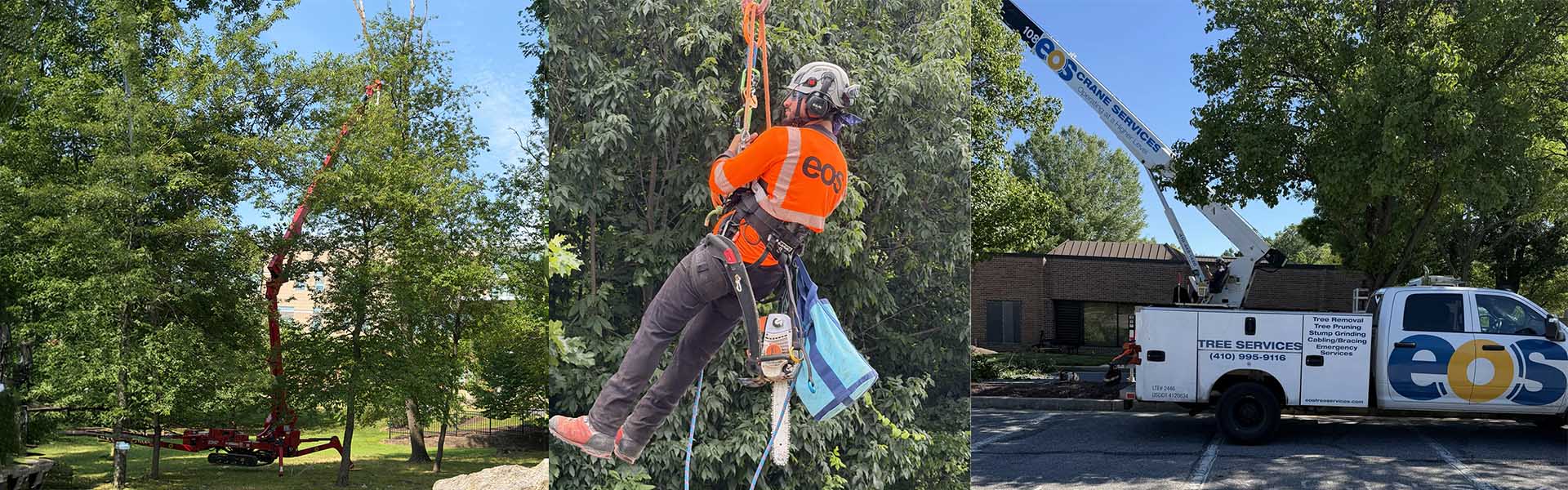
A tree inspection might sound like a formality, but it often turns up problems that no homeowner would spot on their own. Trees are easy to take for granted, especially when they look perfectly fine from the yard. The truth is that some of the most serious structural and health issues are invisible from the ground, and by the time they become obvious, you may already be dealing with a fallen limb, a damaged roof, or worse. That is why a professional inspection matters a lot more than most people realize.
What You Cannot See Can Still Hurt You
The most dangerous tree problems tend to hide in plain sight. Internal decay is a perfect example. A tree can lose a significant portion of its structural wood to fungal rot while still putting out healthy-looking leaves every spring. From the outside, nothing seems wrong. But inside, the trunk or a major limb has been quietly hollowing out for years.
Our ISA Certified Arborists use a combination of visual assessment and hands-on techniques to evaluate things like bark anomalies, root collar issues, and crown density changes that point to deeper problems. Over our team’s six decades of combined experience, we have seen how quickly a tree that appears stable can become a real hazard once the full picture comes through.
Homeowners in Lisbon, Elkridge, Savage, and surrounding areas tend to have mature trees on their properties, which is one of central Maryland’s greatest natural assets. Mature trees also carry more risk when left uninspected, simply because there is more history, more exposure to storms, and more time for issues to develop unseen.
What a Professional Tree Inspection Actually Covers
A thorough inspection goes well beyond a quick look at the trunk. Here is what our arborists typically evaluate:
- Root zone health: Compacted soil, girdling roots, and fungal growth near the base can all signal serious instability that starts underground.
- Structural integrity: We look for cracks, included bark (where two stems grow into each other and create a weak union), and co-dominant stems that are prone to splitting.
- Signs of pest or disease activity: Boring insects, cankers, unusual discoloration, and early-stage infections are far easier to address when caught before they spread.
- Deadwood and hanging limbs: Sometimes called “widow makers,” these are branches that have already died but are still lodged in the canopy, waiting for a windy day.
- Proximity to structures: We assess how a tree’s growth pattern and lean interact with your home, power lines, fencing, and other features on the property.
Fall Is a Smart Time to Schedule One
October is actually one of the better months to have your trees looked at. As leaves begin to drop, the canopy opens up and structural issues become easier to see. Any damage from summer storms that went unnoticed is still fresh enough to address before winter weather adds more stress to already-compromised trees. If you have been putting off an inspection, this fall is a natural time to get it done.
We serve homeowners and commercial property owners across the region, including Lisbon, Elkridge, and Savage, along with Ellicott City, Columbia, Glenelg, Dayton, Glenwood, Highland, and surrounding areas. As a locally owned company holding Maryland Licensed Tree Expert credentials (LTE #2446), we know the species, the soil, and the seasonal patterns that affect trees specifically in this part of the state.
The Cost of Skipping an Inspection
Tree removal after an emergency is almost always more complicated and more expensive than planned work. When a tree fails during a storm and lands on a structure, you are suddenly dealing with property damage, safety risks, and a more involved removal process. We offer 24/7 emergency tree service precisely because these situations happen, but the goal is always to help you avoid getting there in the first place.
A routine tree inspection is one of the most straightforward ways to protect your property and the people on it. We keep our pricing honest with no hidden fees, and we offer a 10% discount for seniors, military members, and first responders as a small way of giving back to the communities we work in every day.
If you have trees you have not had evaluated recently, or if something specific has been catching your eye and you are not sure whether to be concerned, please give us a call or drop us an email. We are happy to talk through what you are seeing and help you figure out the right next step.