
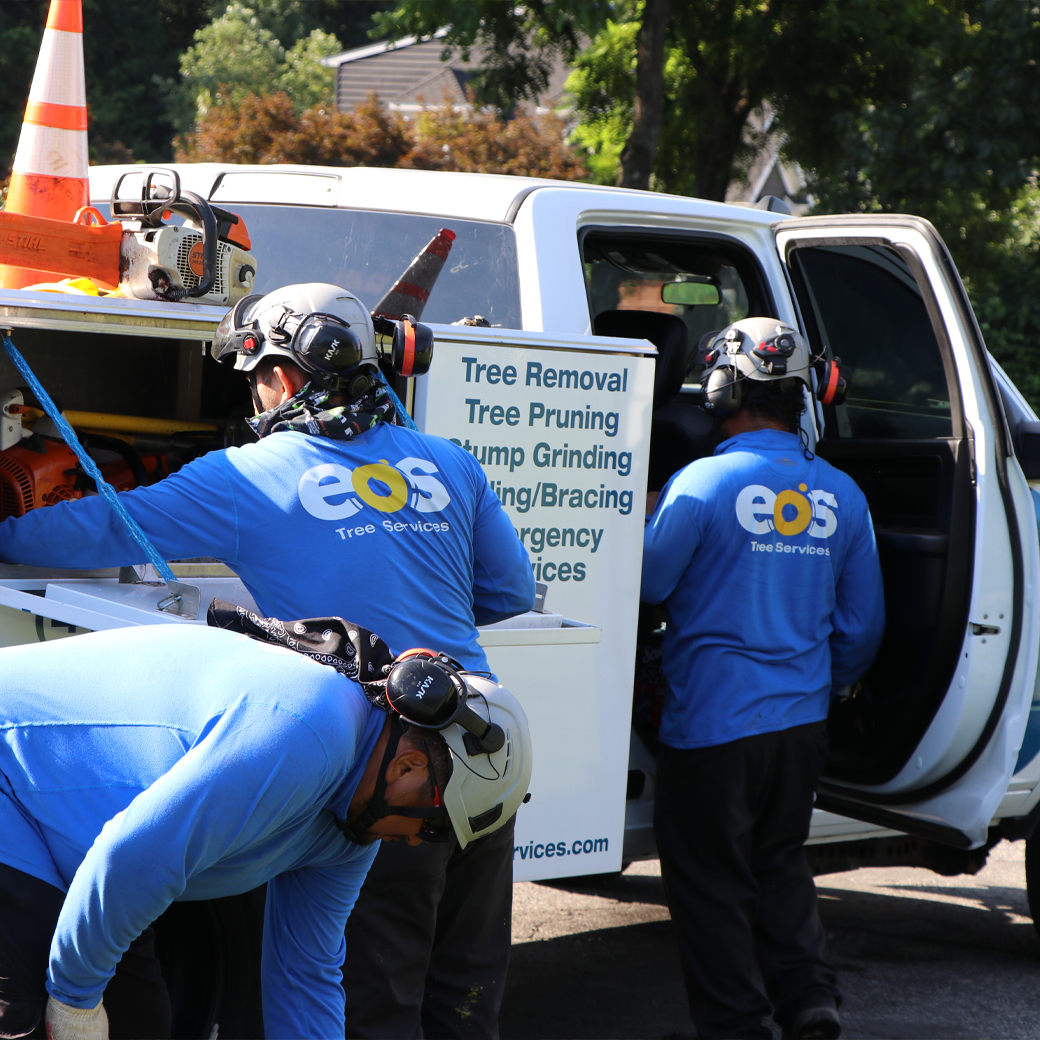
A certified arborist is more than someone who knows how to cut down a tree. The certification represents a serious credential, earned through years of hands-on experience and a rigorous examination covering everything from tree biology and soil science to proper pruning technique and tree risk assessment. If you have trees on your property in Ellicott City, Columbia, Glenelg, or anywhere in the surrounding area, understanding what a certified arborist actually does can help you make smarter decisions about the trees in your care.
The Training and Credentials Behind the Title
The ISA Certified Arborist designation, issued by the International Society of Arboriculture, is widely regarded as the standard of professional competence in tree care. Earning it requires documented field experience and passing a comprehensive exam that covers a broad range of arboricultural knowledge. Maryland also has its own licensing system for tree experts, and our team holds both ISA Certified Arborist credentials and Maryland Licensed Tree Expert status. That combination matters because it means we are accountable to professional standards at both the national and state level.
With over six decades of combined experience across our team, we have worked with just about every tree species common to central Maryland, in every kind of condition. That depth of experience changes how you look at a tree. Where an untrained eye might see a healthy oak, an arborist might notice early signs of decay, a structural weakness in the branch union, or root issues that could become a serious problem during a storm.
What We’re Actually Looking At
When a certified arborist evaluates a tree, the process is systematic. We look at the overall structure and form, checking for dead or dying branches, co-dominant stems that could split under load, and signs of pest or disease pressure. We assess the root zone, because many tree problems start underground and show up in the canopy long after the damage is done. We look at the site conditions too: soil compaction, drainage, nearby construction, overhead utility lines.
For homeowners in Dayton, Glenwood, and the communities around them, tree risk is a real concern, especially heading into late summer when storms can put stressed trees to the test. A formal tree inspection by a certified arborist gives you an honest picture of what your trees are actually dealing with, and what your options are. That might mean pruning to reduce wind resistance, cabling or bracing to support a structurally compromised limb, or in some cases, recommending removal before a tree becomes a hazard.
Beyond Removal: The Full Picture of Tree Care
One thing that surprises many property owners is how much of what a certified arborist does is focused on keeping trees alive and healthy, not just removing them. Plant health care, proper pruning to encourage strong structure, soil treatments, and long-term monitoring are all part of the work. We genuinely prefer to save a tree if saving it is the right call for the property and the people on it.
That said, there are times when removal is the safest and most responsible choice, and a certified arborist can tell the difference. We work with both residential and commercial properties throughout Ellicott City, Columbia, Glenelg, Dayton, Glenwood, and surrounding areas, and we bring the same level of honest assessment to every job, regardless of size. We have never been interested in recommending work that is not needed, and our pricing reflects that straightforward approach.
Why Credentials Matter More Than You Might Think
Tree work is physically demanding and genuinely hazardous. Hiring someone without proper credentials and insurance puts your property and your liability at risk, not just the worker. A licensed and insured tree care company with certified arborists on staff is held to a higher standard, and you have real recourse if something goes wrong.
It also affects the quality of the work itself. Improper pruning cuts, for instance, can permanently damage a tree and open it up to disease. A certified arborist knows where to make the cut, how much to remove, and what the tree needs to recover well. These are not small details.
If you have questions about a tree on your property, or you would like a professional inspection before the weather gets unpredictable, please give us a call or drop us an email. We are happy to take a look and give you a straight answer about what we see.